The Hidden Costs of Poor Network Cabling Installation
A network rarely fails all at once. More often, it erodes. A printer drops offline twice a week. Video calls freeze for one person in a conference room but not another. A cloud backup that should finish overnight stretches into midmorning. Staff blame the internet provider, the switches, the laptops, the software update that rolled out last month. Meanwhile, the real problem is sitting above the ceiling tiles or tucked behind a wall plate: poor network cabling installation.
That is what makes bad cabling so expensive. It hides in plain sight. The upfront invoice may look attractive, especially when a contractor underbids a structured cabling project by cutting corners no one will see on day one. Months later, the business starts paying in smaller, harder-to-track amounts: technician callouts, staff downtime, delayed moves, duplicate troubleshooting, equipment that gets replaced before its time, and a network no one fully trusts.
When people talk about technology budgets, they often focus on visible gear. Firewalls, switches, wireless access points, servers, and laptops all get attention because they are easy to price and easy to point at. Network cabling is different. It sits in the background doing its job, or not doing it, for years. That makes it tempting to treat data cabling as a commodity. In practice, it behaves more like infrastructure. Good infrastructure disappears. Bad infrastructure makes everything above it perform worse.
The cheap bid is rarely the cheap outcome
A poor cabling job usually starts with a simple assumption: cable is cable. If two vendors both promise working drops, why pay more for one than the other? On paper, that logic feels reasonable. On site, it falls apart fast.
Experienced installers understand that the cable itself is only one part of the system. Performance depends on pathway planning, bend radius, separation from electrical lines, proper terminations, labeling, testing, patch panel layout, rack organization, grounding where required, and enough slack to service the system later without creating a mess. Miss any of those details, and the cable may still pass traffic, at least for a while. The trouble appears under load, during environmental changes, or after the next office reconfiguration.
I have seen offices where brand-new CAT6 cabling was installed with tight cinch ties crushing cable bundles, patch panels overfilled, and runs draped across fluorescent ballasts. The client believed they were buying a modern business network installation. What they really bought was a collection of future service tickets.
This is why the cheapest proposal often carries the highest long-term cost. The savings are immediate and obvious. The losses are deferred and scattered, which makes them easy to underestimate.
Downtime is not just an IT problem
When a network link is unstable, the financial damage does not stop at the IT department. It spreads to every team whose work now takes longer or has to be repeated.
A single bad run in office network cabling can affect a desk phone, a payment terminal, a wireless access point, or a workstation handling large files. If the port negotiates down from 1 Gbps to 100 Mbps because of poor termination or damaged pairs, the connection may still appear functional. That is one of the worst scenarios because the issue drags on. Users adapt, complain intermittently, and waste time every day without anyone recognizing the total cost.
In a small office of 20 people, if even five employees lose just 15 minutes a day to intermittent connectivity, that adds up quickly. Over a month, you are looking at dozens of lost work hours. Over a year, the hidden labor cost can exceed the entire price difference between a low-grade installation and a properly executed structured cabling system.
In larger environments, the stakes rise fast. A warehouse with poorly installed ethernet cabling feeding barcode stations and access points may see order processing delays. A dental office with unreliable connections between imaging equipment and workstations may lose schedule efficiency. A law firm waiting on uploads to document systems may not miss deadlines outright, but billable productivity takes a hit. These losses rarely appear as a line item labeled “bad cable.” They show up as lower output, frustrated staff, and managers who suspect the systems are underperforming without understanding why.
Intermittent faults are the most expensive faults
A complete outage is disruptive, but it has one advantage: everyone agrees there is a problem. Intermittent faults are far more costly because they burn time in diagnosis.
A cable with marginal terminations may pass a basic continuity check and still fail under actual traffic conditions. A run that is too long, kinked, or routed near sources of interference may behave differently depending on humidity, temperature, load, or the PoE draw of the connected device. A conference room may work fine with one laptop and fail when six people join a video meeting over Wi-Fi because the access point uplink is unstable. A security camera may reboot at night when infrared mode increases power demand over a run that should never have been approved.
That kind of issue sends teams in circles. The MSP checks the firewall. The software vendor reviews logs. Someone replaces the switch. A user gets a new dock. Weeks later, the root cause turns out to be a poorly punched jack hidden behind a faceplate.
I once walked a site where a client had replaced three VoIP phones, one switch, and half a dozen patch cords trying to solve random call drops in a reception area. The problem was a single horizontal run terminated with too much untwist at the jack, then stuffed sharply into a shallow box. Fixing it took under an hour. Finding it took months because every symptom pointed somewhere else first.
Poor installation shortens the life of your network
Cabling should outlast several generations of active equipment. That is one of the main economic arguments for doing it right. A business might replace switches every five to seven years, access points every four to six, and endpoints even more often. The underlying low voltage cabling should support those changes without needing to be redone.
When installation quality is poor, that long service life disappears. Moves, adds, and changes become risky because there is no confidence in labels, no usable slack, and no orderly patching strategy. Technicians spend more time tracing ports manually. Every modification increases the chance of disconnecting something important. Instead of serving as a stable platform, the cabling plant becomes fragile.
This is especially costly during growth. A company that starts with modest bandwidth needs may later roll out more cloud applications, denser Wi-Fi, PoE cameras, smart building controls, or higher-capacity uplinks. If the original network cabling was installed carelessly, those upgrades can trigger a second round of construction much earlier than expected.
The difference between CAT6 cabling and CAT6A cabling is a good example of where long-term thinking matters. Not every office needs CAT6A cabling everywhere. In many small and mid-sized spaces, CAT6 is still appropriate for desktop runs. But if you know a server room, IDF uplink, high-density wireless zone, or specific application may require 10-gigabit capability over copper, the wrong decision at install time can become expensive later. The hidden cost is not just replacing cable. It is reopening pathways, disrupting occupied spaces, coordinating after-hours work, and touching finishes that were already complete.
Bad cable work drives up support costs year after year
Service organizations see this pattern constantly. The business with clean, tested, documented structured cabling has fewer tickets, shorter visits, and faster issue isolation. The business with messy racks and unlabeled ports pays more every time a technician walks in the door.
Troubleshooting time expands when no one knows what goes where. If patch panels are unlabeled or labels do not match room numbers, even a simple desk move becomes detective work. If terminations were never certified properly, you cannot trust the plant. Every weird symptom requires a broader search.
The support costs compound in a few predictable ways:
- More truck rolls for problems that should have been prevented during installation
- Longer on-site time because technicians must trace, test, and re-document basic connections
- Premature replacement of switches, phones, access points, or NICs that are blamed before cabling is checked
- Greater after-hours labor when fixes disrupt users during the workday
- Repeat visits because the root issue was never isolated the first time
None of this is theoretical. In poorly installed environments, I have seen businesses normalize calling for help every few weeks over network oddities they assume are part of modern office life. They are not. A stable cabling backbone should make the network boring.
Power over Ethernet exposes weak workmanship
As more devices rely on PoE, poor workmanship becomes harder to hide. Wireless access points, VoIP phones, surveillance cameras, door access hardware, and even some displays now depend on cabling to carry both data and power. That raises the consequences of small mistakes.
A cable run that barely supports a laptop at a desk may fail outright when powering a higher-draw device. Excessive resistance from poor terminations can lead to voltage drop. Heat becomes a factor in dense bundles. Inferior patch cords show up as random resets. A camera that flickers offline for 30 seconds at a time is not just annoying, it may create security gaps. A https://jsbin.com/xiweqimuzo wireless access point rebooting under load can look like an internet issue when the real problem is the cable path and termination quality.
This is where standards-based installation matters. Low voltage cabling is not simply a matter of getting link lights to turn on. It requires understanding channel performance, bundle management, pathway fill, and how future device classes affect cable design choices.
The building itself can become part of the bill
Poor network cabling installation does not only damage performance. It can create direct building and safety issues.
Cables unsupported above a drop ceiling may end up resting on ceiling tiles, light fixtures, or sprinkler components. Unsealed penetrations can create code concerns. Overstuffed conduits complicate future additions. Sloppy wall openings and poorly mounted faceplates leave visible damage that facilities teams eventually have to correct. In leased spaces, that can become a tenant improvement dispute at move-out.
There is also the issue of accessibility. A rushed installer may bury junctions, ignore service loops, or route cable in ways that make later maintenance unnecessarily invasive. Then, what should be a simple add or change turns into ceiling work, wall repair, or out-of-hours access coordination.
Businesses often separate “IT costs” from “facilities costs,” but poor office network cabling links the two. If your cabling contractor leaves a disorderly ceiling space behind, the repair bill may land under another department. It is still part of the same hidden cost.
Documentation sounds boring until you do not have it
The best network cabling installation projects leave behind more than live ports. They leave a map. Labels are consistent. Patch panels correspond to floor plans. Test results are available. Pathways and rack elevations make sense. If a port serves a conference room TV, an access point, or a reception desk, someone can tell at a glance.
Without documentation, every future task gets slower. Expanding a department takes longer. Bringing in a second internet circuit is harder. Swapping a switch becomes riskier. Auditing unused runs for repurposing turns into guesswork.
This is one of the first corners cut by low-cost providers because documentation takes time and discipline. The irony is that documentation has enormous value precisely when staff changes. The person who “just knew” the network leaves, and the next team inherits a tangle.
A clean documentation package does not need to be elaborate. It does need to be accurate. In many offices, that alone can save hours during every future change window.
When bad cabling blocks business growth
A company can tolerate minor network irritation for a while. Growth usually exposes the limits.
Maybe the office adds more staff and the wireless network starts struggling because access points were cabled to poor locations. Maybe a production team moves to large cloud-based files and discovers that several drops negotiate below expected speed. Maybe the company adopts IP cameras, badge readers, and smart conference room systems that increase demand on both PoE and switch uplinks. What looked acceptable in a lightly used network becomes a bottleneck under real operational pressure.
At that point, the business pays twice. First for the original subpar data cabling, then again for remediation. Remediation is almost always more expensive than correct first-time installation because occupied spaces are harder to work in. Furniture is in place. People need access. The ceiling contains years of additional services. There is more coordination, more night work, and more caution around existing operations.
The painful part is that none of this improves the visible business in the way a new office renovation or new systems rollout would. It is catch-up spending. Money used to undo preventable mistakes.
Signs the problem may be in the cabling
Not every network issue comes from cabling, but certain patterns should move it higher on the suspect list. Businesses often spend too long looking elsewhere.
- Devices randomly dropping to lower link speeds
- VoIP jitter or call drops isolated to certain desks or rooms
- Access points or cameras rebooting unexpectedly on PoE
- Trouble recurring after equipment swaps and software updates
- Patch panels, wall jacks, or closets with poor labeling and visible cable strain
These are not definitive proof, but they are common warning signs. If several appear together, structured cabling deserves a closer look.
What good installation actually buys you
The value of good cabling is not glamour. It is stability, headroom, and easier operations. A well-executed system supports current needs without fighting future ones. It reduces uncertainty.
That means proper pathway design so cable is protected and accessible. It means selecting the right medium for the application instead of overselling or underspecifying. It means using quality components that belong together as a system. It means careful termination practices, certification testing where appropriate, sensible rack layout, and documentation that survives staff turnover.
It also means judgment. Not every area needs the highest category cable. Not every small office needs the same approach as a healthcare facility or warehouse. Good installers ask practical questions. Where will access points go? Will there be PoE cameras? How likely is reconfiguration? Are there noisy electrical environments? Are there long runs that make CAT6A cabling worth the added material and handling effort? What is the business actually trying to support over the next five to ten years?
That kind of planning does not always show up in a one-page quote, but it shows up later in performance.
Paying for quality once beats paying for mistakes repeatedly
Business owners sometimes hesitate when they see a higher proposal for network cabling or low voltage cabling. That is understandable. Cabling is buried cost. It does not flash, beep, or sit on anyone’s desk. Yet it underpins nearly every modern workflow.
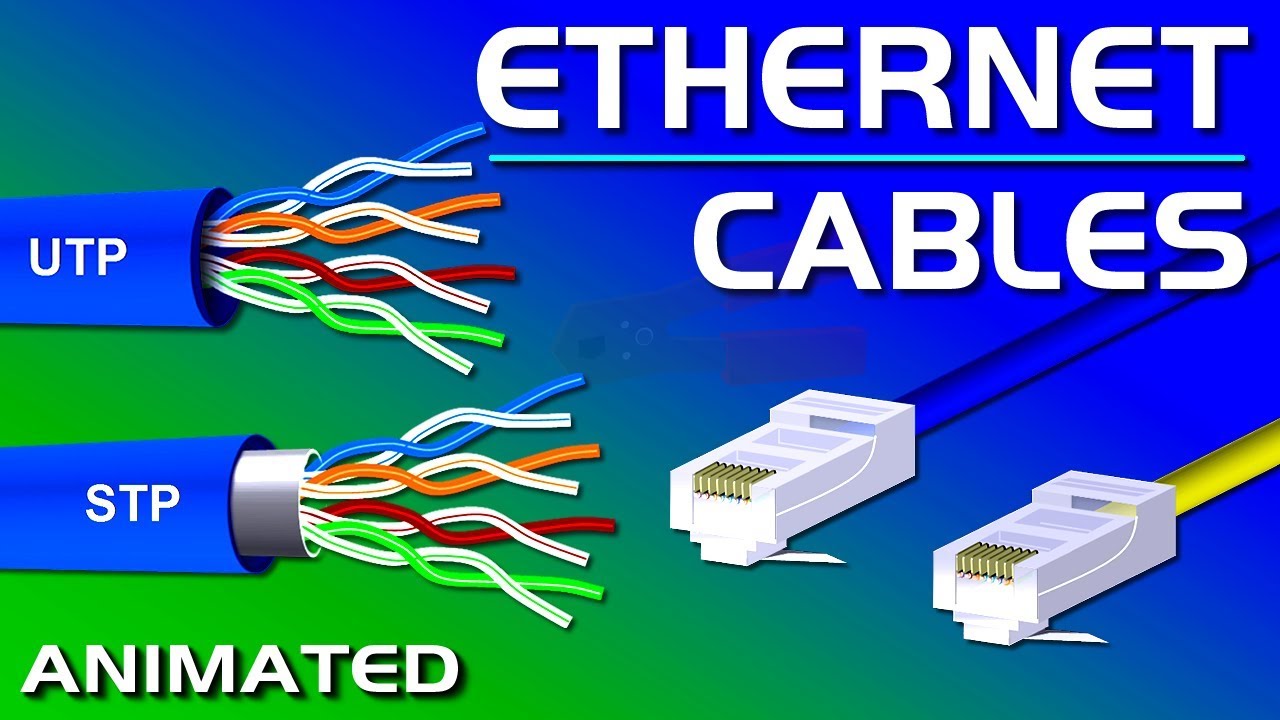
The hidden costs of poor network cabling installation are not dramatic in the way a server outage is dramatic. They are cumulative. Slower work. More troubleshooting. More finger-pointing. More avoidable replacements. More disruption during growth. More money spent on correction rather than improvement.
Well-installed ethernet cabling and structured cabling give a business something valuable that does not often get celebrated: confidence. Confidence that a new switch can be deployed without mystery. Confidence that a wireless issue is actually wireless, not a bad uplink. Confidence that moving a team does not mean days of tracing cables. Confidence that the physical layer will support the business quietly, year after year.
That is the real comparison to make. Not the cheapest bid versus the higher bid, but the cost of doing it once versus the cost of living with it every day after.
Fontana Tech Pros provides professional network cabling installation, structured cabling, fiber optic installation, commercial WiFi, access control, security camera installation, alarm systems, and phone system solutions for businesses throughout Southern California. Learn more at https://fontanatechpros.com/.
Fontana Tech Pros specializes in reliable network cabling solutions for commercial offices, warehouses, schools, and industrial facilities. Our experienced team delivers high-quality structured cabling and low-voltage installations designed for long-term performance.